
From fertility to labour preparation and postpartum recovery, yoni steaming carries ancient wisdom into modern healing.
Would you sit over a bowl of steaming herbs to prepare your body for conception, support labour, or nurture recovery after birth?
Across the world, many women do.
Yoni steaming, also known as vaginal steaming, V-steam, pelvic steam sauna and peristeam hydrotherapy, has been practised for generations by the midwives and medicine women of Indigenous cultures. Long before modern obstetrics and gynaecology became the standard, women relied on ancestral wisdom and plant medicine to support their reproductive health. Today, this traditional practice is being reclaimed as women seek holistic approaches to fertility, birth preparation, and postpartum healing.
Postpartum Recovery: The Fourth Trimester and the 40-Day Window
Postpartum recovery is universally the most common reason women turn to yoni steaming. Across many traditions, it is held that for 40 days after birth, the door between worlds remains open, and great care is taken of the new mother during this window. Nutritious food is prepared for her, daily massage offered, and herbal steams used to support the uterus and the perineum as they heal.
A small foundational study commissioned by the Peristeam Hydrotherapy Institute (IPHI) in 2020, the first clinical study of its kind, measured postpartum recovery using pelvic exams on days 4 and 8, and again at 6 weeks after birth. There was a marked difference between the study group, who steamed for 5 consecutive days from day 4, and the control group, who did not steam.
What the Study Found: Key Benefits of Postpartum Yoni Steaming
1. Supports the uterus returning to its pre-pregnancy size and position more quickly.
By day 8, the steam group’s fundal measurements were 8 inches across and 10 inches high, compared to the control group’s 12 inches across and 14 inches high.
2. Supports efficient expulsion of lochia (postpartum discharge).
After 5 days of steaming, every woman in the steam group had progressed to the serosa (second) stage of lochia, while almost half of the control group were still in the rubra (first) stage. By 6 weeks, all but one of the steam group had stopped bleeding entirely; in the control group, all but one were still in the alba (final) stage.
3. Relieves discomfort from stitches or tearing, and reduces the risk of uncomfortable scar tissue.
The steam group reported no discomfort throughout the 6-week study period. The control group reported itching, pulling and tenderness.
4. Resolves swelling, perineal gapping and haemorrhoids.
By day 8, two-thirds of the steam group had fully healed labia and resolved haemorrhoids. The control group was still in the healing process, with no haemorrhoid reduction recorded at 6 weeks.
5. Promotes relaxation, normalises pulse rate and lowers blood pressure.
On day 4, both groups had near-identical readings. After 5 days of steaming, the steam group’s average systolic blood pressure dropped from 119 to 97, while the control group’s rose to 123. Both groups had returned to normal readings by 6 weeks, suggesting a powerful short-term protective effect during the most vulnerable postpartum window.
These outcomes are not trivial and deserve a second look, particularly within a system that routinely discharges women after just hours of giving birth and offers a single 6-week check-up, in stark contrast to these traditions of ongoing, embodied postpartum support.
Yoni Steaming for Labour: Softening the Body for Birth
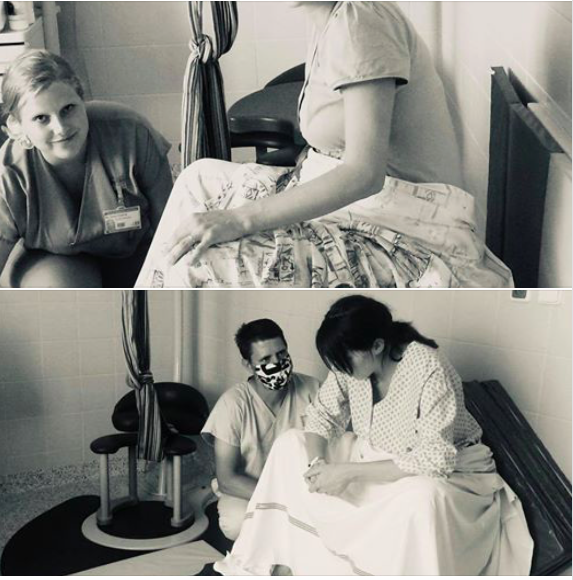
While vaginal steaming is contraindicated during pregnancy, it can be introduced from 38 weeks onwards to help labour progress more quickly and more comfortably.
The observed benefits of yoni steaming before and during labour are significant enough that in the Czech Republic, the practice has been introduced into maternity wards and birthing centres across more than 30 hospitals, resulting in a marked reduction in episiotomies, the surgical cutting of the perineum.
Despite episiotomy’s use being questioned for decades, it remains one of the most commonly performed obstetric procedures.
How Yoni Steaming Supports Labour Preparation
- Softens, relaxes and prepares the body for birth
- Brings gentle warmth, circulation and elasticity to the cervix, vagina and perineum
- If labour stalls, can encourage contractions to resume
Yoni Steaming for Fertility and Womb Preparation Before Conception
Many women are now incorporating a yoni steaming routine before conception by yoni steaming at home. This creates a hospitable womb environment, one where a fertilised egg can successfully implant and develop.
How Yoni Steaming May Support Reproductive Health and Fertility
Fertility is supported by:
- Regulating the menstrual cycle to 28–30 days, creating a predictable, trackable pattern
- Reducing clots, brown blood and stringiness, signs that old blood and tissue are being fully cleared with each cycle
- Relieving menstrual pain, which can itself indicate pelvic congestion
For women undergoing IVF, where the chances of a successful pregnancy and live birth sit at around 29–33% for those under 38, dropping significantly for those over 40, the desire to support the womb environment for conception is understandable and clear.
Yoni Steaming as Holistic Women’s Healthcare: Complementary, Not Replacement
Yoni steaming is not a replacement for a skilled midwife or doula. Rather, it is a complementary therapy rooted in ancestral knowledge, one that honours the innate intelligence of the female body, and something increasingly sought out in a world that has long prioritised clinical science over embodied, intuitive self-knowledge.
Yoni steaming offers something both simple and profound:
A bowl of herbal tea. A few moments of stillness. A return to the wisdom of women who came before us.
If you are interested in yoni steaming at home yourself, you can download my free guide to support you.